
No Shared Priority Queue
Privacy deadlines don't wait for an unrelated audit cycle. Zycato runs on privacy timelines only, so rights-request windows and breach intimation clocks never compete with SOC 2 or ISO evidence collection.
Why Zycato
Privacy deadlines don't wait for an unrelated audit cycle. Zycato runs on privacy timelines only, so rights-request windows and breach intimation clocks never compete with SOC 2 or ISO evidence collection.
Consent, rights, discovery, risk, governance, automation and reporting all write into the same record, so nothing has to be reconciled later.
Consent capture, ROPA (record of processing activities) and DPIA (data protection impact assessment) workflows are written to the specifics of the DPDP Rules, then extended to GDPR and CCPA/CPRA.
Data Protection Officers (DPOs), legal and privacy engineering teams work in the language of the statute, not generic controls. Zycato's workflows use the same terms: notice, purpose, lawful basis, retention, erasure, breach intimation.
How Zycato Works: Know, Run, Prove
Everything in Zycato sits on three lines of work: know what personal data you hold, run the promises you made about it, and prove both happened.
Core Capabilities
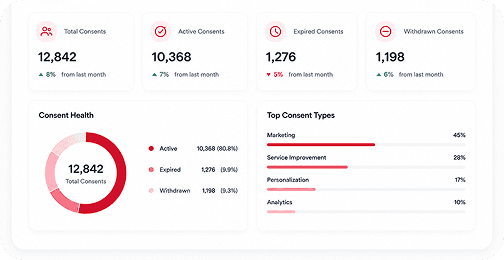
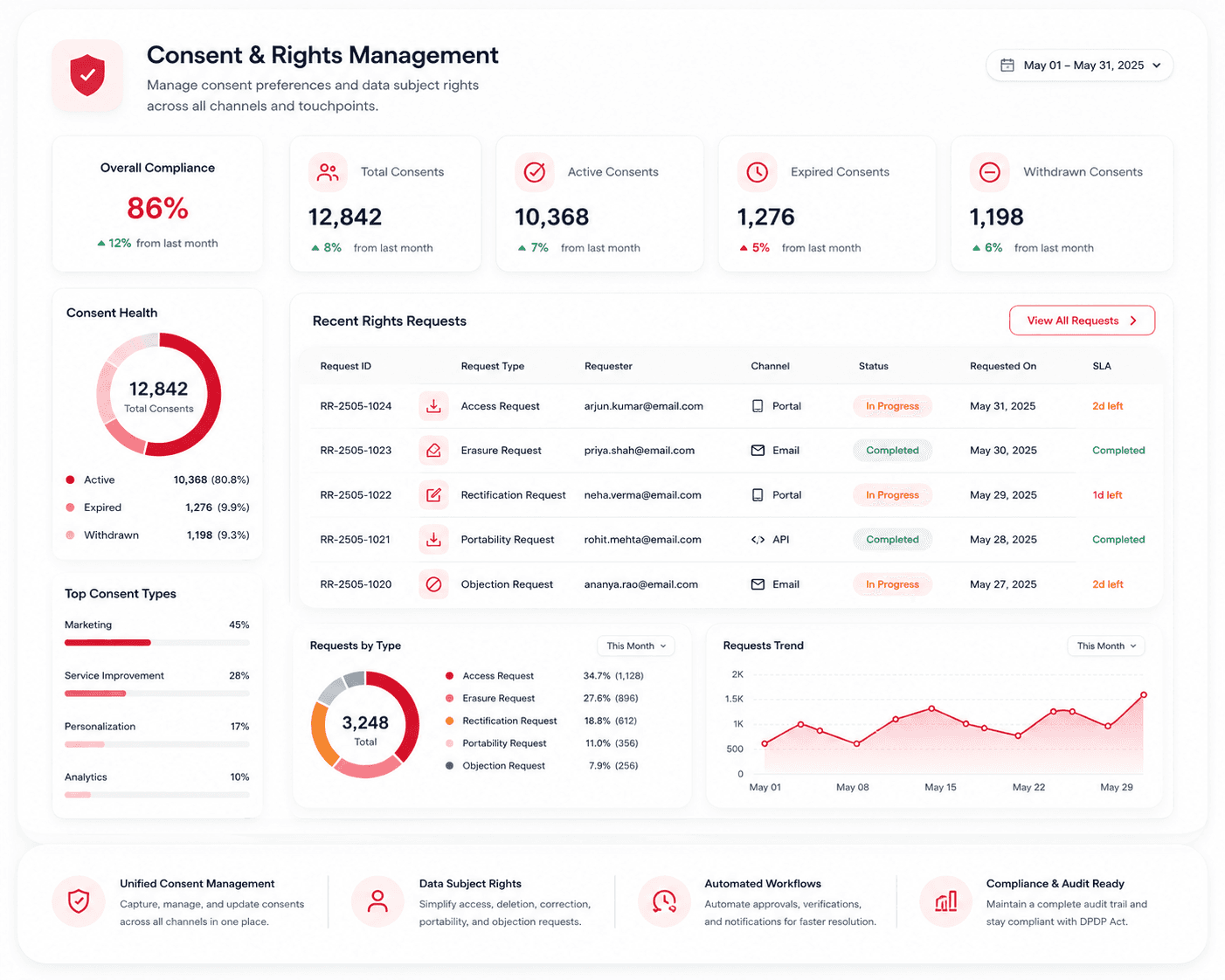
Define each purpose once, capture it at every front door (web, mobile, IVR, branch counter and agent-assisted) and hold it on one consent ledger. Withdrawal is pushed to the connected systems that relied on that consent, and each one returns an acknowledgement that processing stopped.
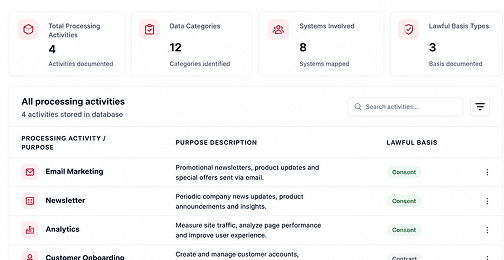
Locate personal data across databases, warehouses, file shares, SaaS estates and endpoints, including copies nobody declared. Discovery connections are read-only and metadata-only: classification runs in place, and only the location, category and purpose reach Zycato, never the data itself. Your record of processing builds from what discovery finds, not from what someone remembered to log.
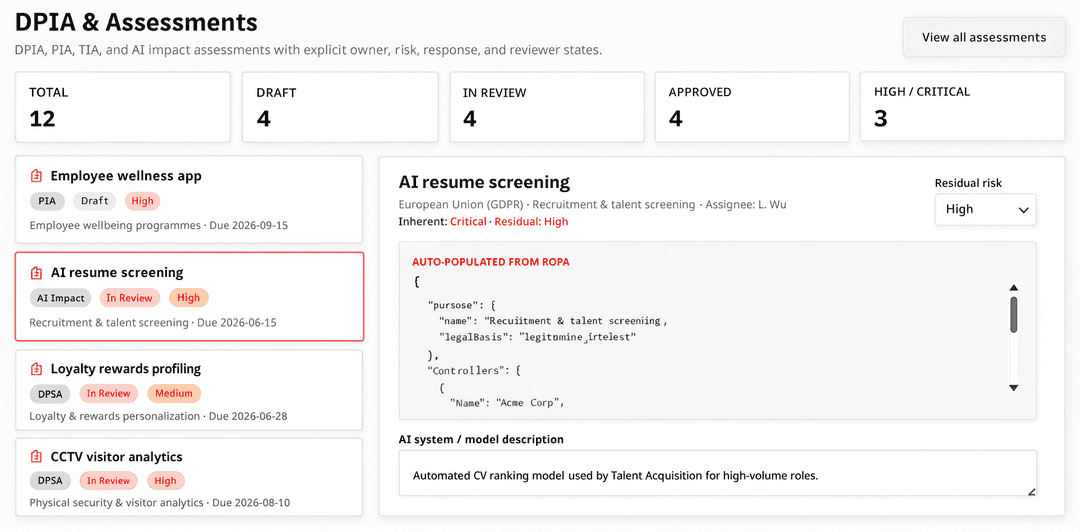
Score and own privacy risks, run assessments triggered by what changed, and close incidents with the remediation recorded against the finding rather than filed separately.
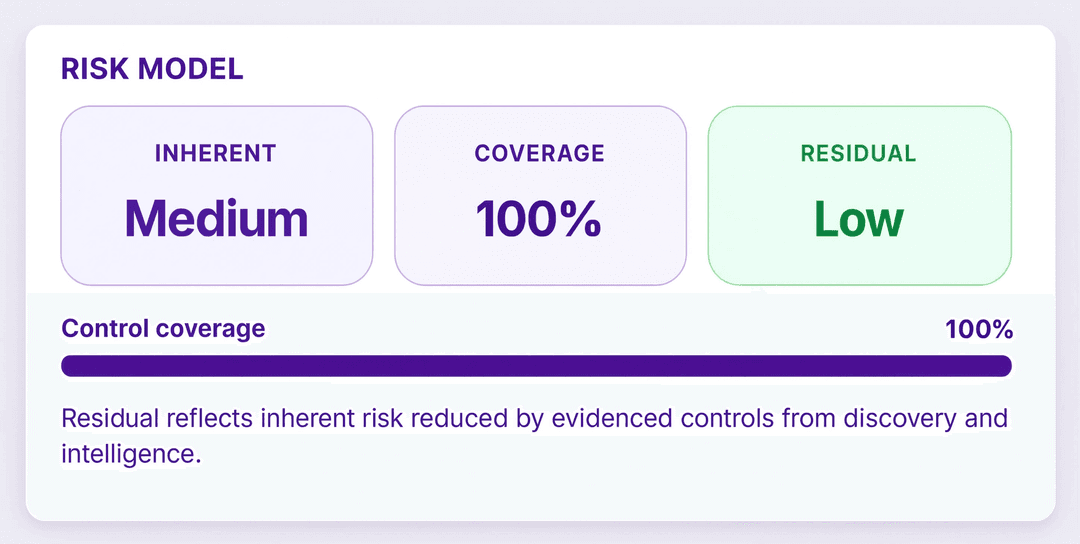
Assess processor and third-party privacy risk and run DPIAs without manual spreadsheets. A sub-processor change raises an alert with a named owner attached, so accountability doesn't lapse after signature.
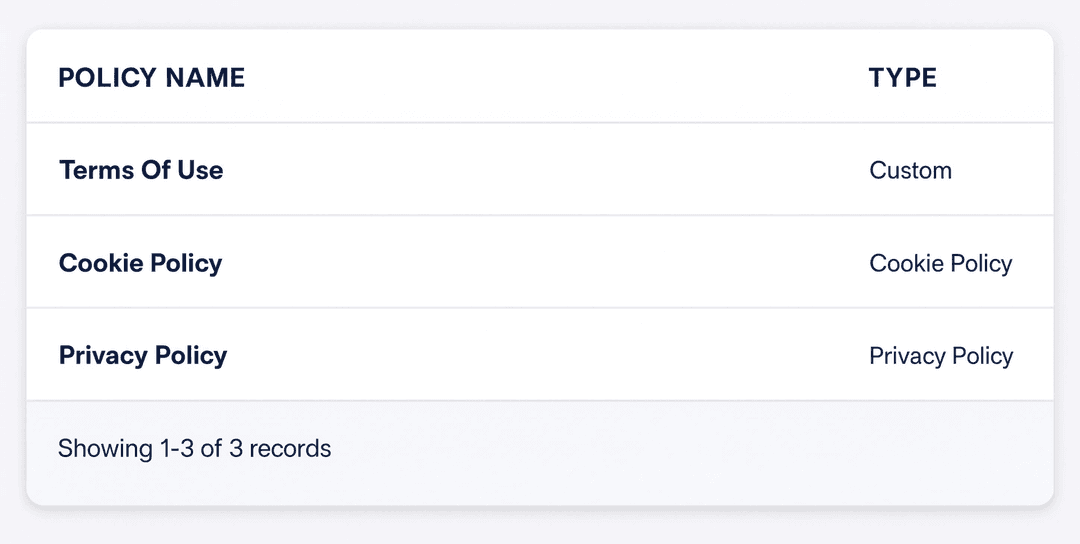
Maintain privacy policies and notices with version, approver, reader and date on record. When a rule or schedule changes, the affected policies and notices are surfaced for review automatically.
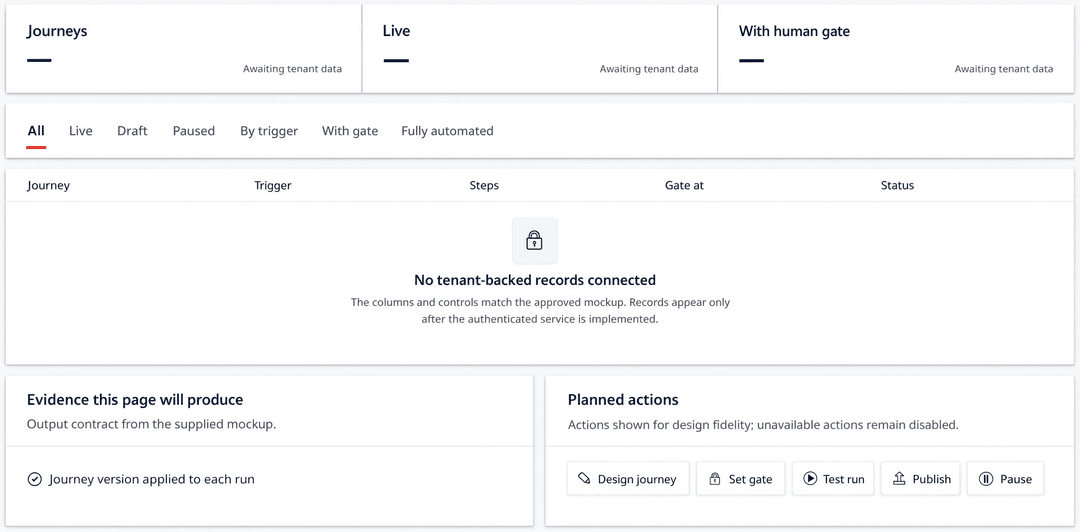
Routine privacy work runs on its own: intake, gather, draft, route. It stops at any step that needs a named person to decide, and that decision is captured with their name against it.
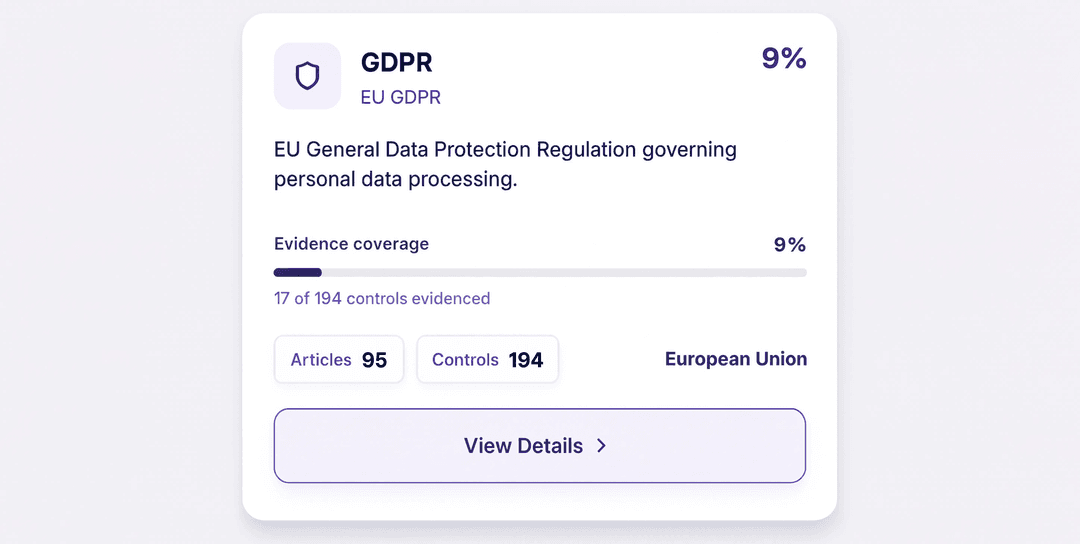
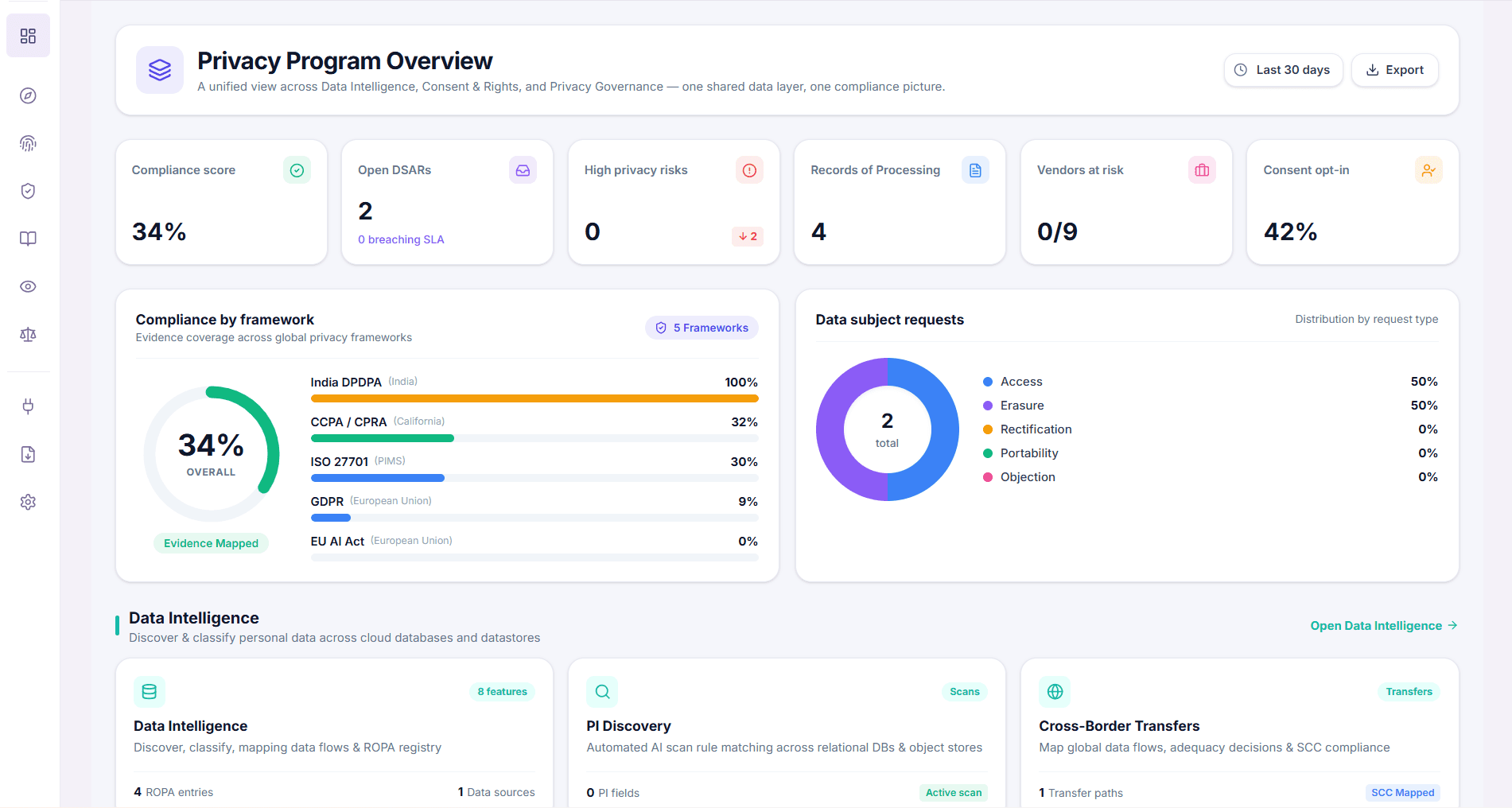
Map a control once and see every privacy law it already satisfies, across the DPDP Rules, GDPR, CCPA/CPRA and ISO 27701.
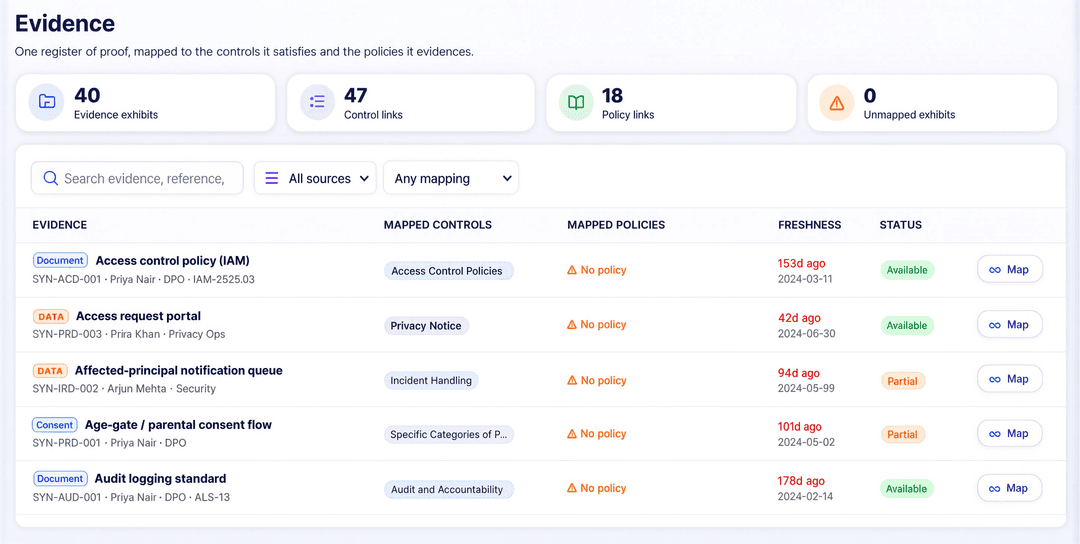
Evidence updates as work happens, so an audit becomes a query rather than a project.
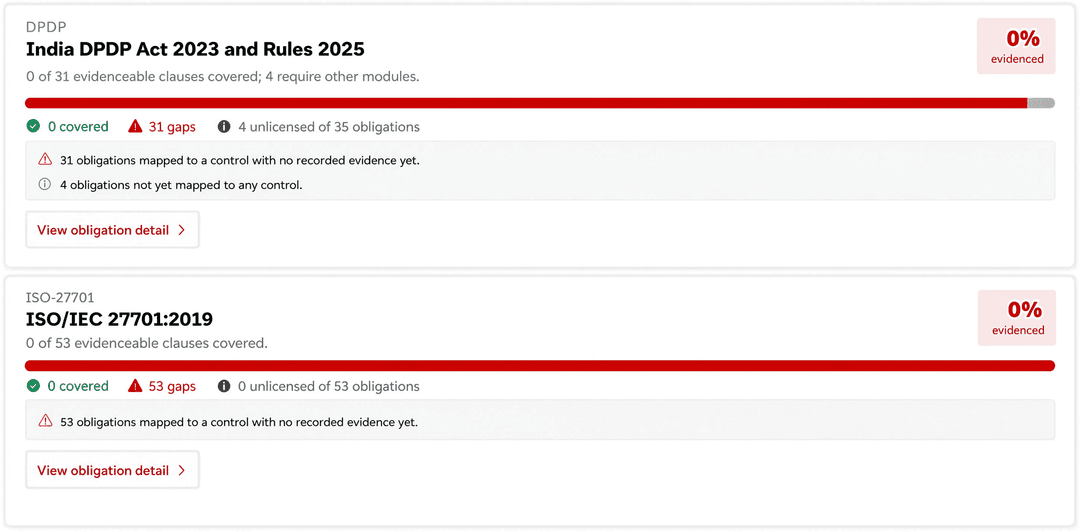
See your compliance posture as it stands today, reconstruct it for any past date, and build board packs, regulator responses and trust pages from one source.
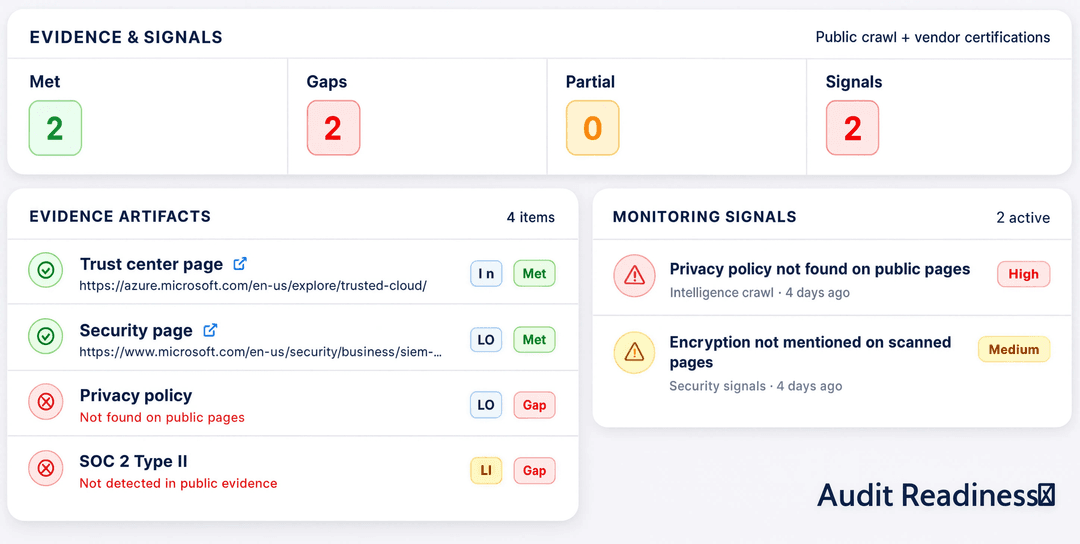
Flag a breach and the intimation workflow starts with the clock already running. Zycato resolves the affected population from the data graph, rather than reconstructing it by hand while the window closes.
Industry & Frameworks
Zycato is written to the DPDP Act 2023 and the DPDP Rules 2025, because they are the strictest regime most Indian enterprises will face. The same discovery graph, consent ledger and control set carry the rest of your regulatory footprint, so exposure outside India doesn't mean running a second privacy platform.
One obligation library with jurisdiction overlays: map a control once and it counts in every regime it applies to. Where regimes diverge, Zycato flags the conflict rather than forcing a single interpretation. DPDP's pre-erasure notice duty against GDPR's open-ended storage limitation is one example. New regimes are added to the library as they commence.
Customer profiles, purchase history, payment data and marketplace interactions, with consent, DSAR and retention workflows built into the customer journey.
Cross-border user data, employee information, product analytics and cloud-hosted data. Data mapping, consent, DSAR automation and vendor risk across every region you operate in.
Patient records, clinical trial data and sensitive health information. Consent management, records of processing, privacy impact assessments and controlled data access.
Employee, supplier, customer and operational data across connected systems, with visibility into how data is processed across distributed operations and third parties.
KYC records, transaction data, loan files and financial information. Consent, retention, rights requests, records of processing and third-party risk in one workflow, with RBI, SEBI and IRDAI retention overlays running alongside DPDP erasure duties.
Continuous Privacy Operations
From consent and data discovery through rights, retention, assessments, audits and breach response, Zycato connects the workflows privacy teams need to run compliance as continuous operations.
Nothing is re-keyed and nothing goes stale, because the connection stays live.
Oracle, SQL Server, PostgreSQL, MongoDB, Snowflake, BigQuery, AWS S3, Azure Blob, file shares and backups.
Salesforce, SAP, Workday, ServiceNow, Zoho, Freshworks, core banking, Microsoft 365, Google Workspace.
Okta, Entra ID, AWS, Azure, GCP, SIEM, DLP and EDR, supplying access, encryption and incident evidence from the tools already running.
Braze, MoEngage, CleverTap, Jira, and email, SMS and WhatsApp gateways, so consent state is enforced where the sends actually happen.
Connectors run both ways: the same integration that finds personal data executes the erasure, pushes consent state downstream and collects the processor's attestation. Discovery is read-only by default, and the connector framework is open for anything not on the list.
Everything you need to know about Zycato and data privacy compliance.
A data privacy management platform automates consent, data discovery, records of processing, data subject rights requests, impact assessments and breach response. Zycato brings these workflows together on one record, written to the DPDP Act 2023 and the DPDP Rules 2025 and extended to GDPR, CCPA/CPRA and ISO 27701.
No. Zycato is built to the DPDP Rules because they are the strictest regime most Indian enterprises face, and the same discovery graph, consent ledger and control set carry GDPR, UK GDPR, CCPA/CPRA, ISO 27701 and other regimes. Map a control once and it counts everywhere it applies
It doesn't. Discovery is read-only and metadata-only. Classification and tokenisation execute in place on your systems, and only metadata reaches the control plane: location, category, purpose and consent state. The personal data itself never leaves your estate.
DSAR (data subject access request) automation covers intake, identity verification, tracking, response assembly and the regulatory clock. Zycato automates the DSAR workflow and writes corrections and erasures back to source systems, with a named person reviewing before anything is released.
No. Zycato reads from your existing systems through live connectors: databases, warehouses, cloud and object storage, identity providers, SaaS applications and security telemetry. The same connection that finds personal data also pushes consent state downstream and executes erasure.
Run consent, records, rights, retention and breach response through workflows written to the DPDP Rules and mapped across the other regimes you're subject to, all answered from one record.
Get a free demo